
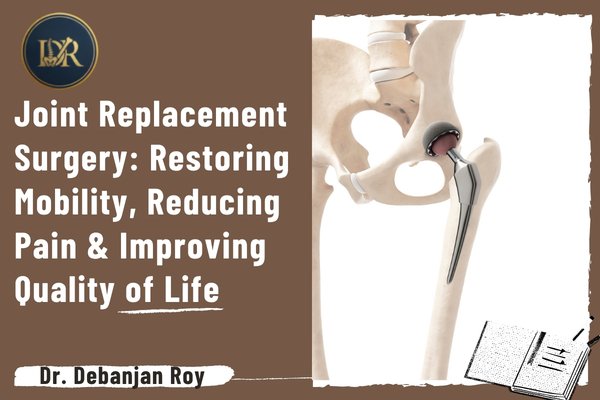
Persistent joint pain can gradually affect almost every aspect of daily life—from walking and climbing stairs to sleeping, exercising, and performing routine activities. When medications, physiotherapy, lifestyle changes, and other non-surgical treatments no longer provide sufficient relief, Joint Replacement Surgery may be considered.
Joint replacement is an advanced orthopedic procedure in which a damaged joint surface is replaced with an artificial implant to reduce pain and restore movement. Modern techniques, including robotic-assisted joint replacement, can help surgeons plan and perform selected procedures with enhanced precision.
With specialized training in joint replacement, Dr. Debanjan Roy provides personalized orthopedic care focused on relieving pain, restoring mobility, and helping patients return to an active lifestyle.
What is Joint Replacement?
Joint replacement is a surgical procedure in which damaged or severely worn parts of a joint are replaced with artificial components called implants or prostheses.
The procedure is most commonly performed for:
- Knee replacement
- Hip replacement
- Shoulder replacement
- Other joints in selected cases
Why Do Joints Become Damaged?
Joint damage can occur due to several conditions, including:
- Osteoarthritis
- Rheumatoid arthritis
- Severe cartilage damage
- Previous joint injuries
- Fractures involving the joint
- Avascular necrosis
- Age-related degeneration
- Certain inflammatory or metabolic conditions
When cartilage wears away, bones may rub against each other, causing pain, stiffness, swelling, and restricted movement.
When Should You Seek Treatment?
Not every person with joint pain requires joint replacement. Surgery is generally considered when symptoms become persistent and significantly interfere with daily life.
You Should Consult an Orthopedic Specialist If You Experience:
- Persistent knee or hip pain
- Difficulty walking
- Pain while climbing stairs
- Severe joint stiffness
- Difficulty getting up from a chair
- Pain that interferes with sleep
- Reduced ability to perform daily activities
- Difficulty exercising or participating in activities you previously enjoyed
- Limited improvement with medications or physiotherapy
When May Joint Replacement Be Considered?
Your orthopedic surgeon may discuss joint replacement when:
- Joint damage is advanced
- Pain is persistent or severe
- Mobility is significantly reduced
- Conservative treatments are no longer effective
- Imaging shows substantial joint degeneration
- Quality of life has been significantly affected
The decision should be based on symptoms, examination, imaging findings, overall health, and individual expectations—not simply age.
Why is Joint Replacement Recommended?
The primary goal of joint replacement is to reduce pain, improve function, and restore mobility when a severely damaged joint can no longer provide satisfactory function.
Potential Benefits
Pain Relief
Replacing damaged joint surfaces can significantly reduce pain caused by advanced joint degeneration.
Improved Mobility
Patients may experience improved ability to walk, stand, climb stairs, and perform everyday activities.
Better Quality of Life
Reduced pain and improved movement can make daily life more comfortable and active.
Greater Independence
Improved mobility can help patients perform routine activities with less assistance.
Long-Term Functional Improvement
Modern joint implants are designed to provide durable function when appropriately selected and cared for.
What is Robotic-Assisted Joint Replacement?
Robotic-assisted joint replacement uses advanced computer-assisted technology to help the surgeon plan and perform selected joint replacement procedures.
The technology can assist with:
- Detailed preoperative planning
- Assessment of joint alignment
- Precise bone preparation
- Implant positioning
- Intraoperative decision-making
Importantly, the surgeon remains in control of the procedure. Robotic technology is an assisting tool rather than an independent surgical system.
Whether robotic-assisted surgery is appropriate depends on the patient’s condition, anatomy, joint damage, and surgeon’s assessment.
Risks and Complications
Joint replacement is a major surgical procedure and, like any surgery, carries potential risks.
Possible Complications Include:
- Infection
- Blood clots
- Bleeding
- Implant loosening or wear
- Joint stiffness
- Persistent pain
- Nerve or blood vessel injury
- Dislocation, particularly after certain hip replacement procedures
- Differences in limb length in selected hip replacement cases
- Need for revision surgery
The actual risk varies according to the joint being replaced, the patient’s health, surgical technique, and postoperative care.
Following preoperative instructions, maintaining a healthy lifestyle, and attending scheduled follow-up appointments can help reduce complications and support recovery.
Frequently Asked Questions (FAQ)
Is joint replacement only for older people?
No. Although joint replacement is more common with advancing age, younger patients may also require surgery when they have severe joint damage or debilitating arthritis.
How do I know if I need joint replacement?
Persistent pain, significant loss of movement, advanced joint damage, and inadequate relief from non-surgical treatments may indicate that joint replacement should be discussed with an orthopedic specialist.
Is robotic joint replacement better than conventional surgery?
Robotic-assisted surgery can provide detailed planning and precise surgical guidance in appropriately selected cases. However, the best technique depends on the patient’s individual condition and the surgeon’s assessment.
How long does a joint replacement take?
The duration varies depending on the joint, surgical technique, complexity of the case, and individual patient factors.
How long does recovery take after joint replacement?
Recovery varies from person to person. Physiotherapy and a structured rehabilitation program are important for regaining strength, movement, and confidence.
Will I need physiotherapy after joint replacement?
Yes. Rehabilitation is an important part of recovery. Your physiotherapist and orthopedic team will guide you through exercises and activity progression.
How long do joint replacements last?
The lifespan of an implant varies depending on factors such as implant type, activity level, body weight, surgical technique, and individual patient characteristics. Regular follow-up helps monitor the joint over time.
Can I return to normal activities after joint replacement?
Many patients are able to return to routine daily activities after recovery. The timing and type of activities should be discussed with your orthopedic surgeon.
About Dr. Debanjan Roy
Dr. Debanjan Roy
MBBS, D. Ortho, DNB (Ortho), MNAMS
Fellowship in Joint Replacement (Kolkata)
Consultant Orthopedic and Robotic Joint Replacement Surgeon
Dr. Debanjan Roy specializes in orthopedic care and joint replacement surgery, with focused training in joint replacement and robotic-assisted joint replacement procedures. His approach emphasizes individualized treatment planning, pain relief, restoration of mobility, and helping patients return to an active lifestyle.
Call to Action (CTA)
If persistent joint pain is limiting your walking, sleep, work, exercise, or everyday activities, it may be time to seek an expert orthopedic evaluation.
Book a consultation with Dr. Debanjan Roy to understand whether joint replacement or another treatment option is appropriate for your condition.
Take the first step toward better mobility, reduced pain, and a more active life.